

-
Table of Contents
Nandrolone: Mechanisms of Action and Implications for Athletes
Nandrolone, also known as 19-nortestosterone, is a synthetic anabolic-androgenic steroid (AAS) that has been used for decades in the world of sports. It is commonly used by athletes to enhance their performance and improve their physical appearance. However, the use of nandrolone has been a controversial topic due to its potential health risks and its classification as a prohibited substance by various sports organizations.
Mechanisms of Action
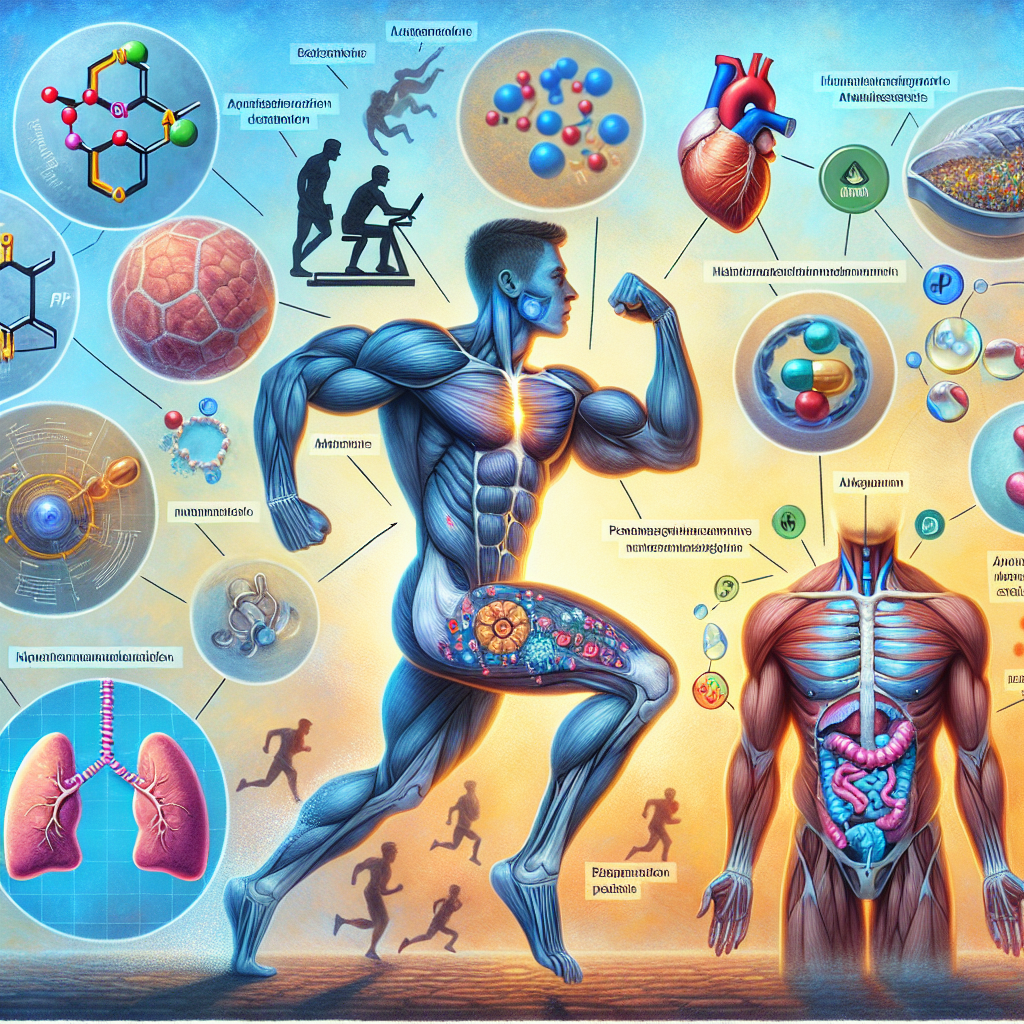
Nandrolone works by binding to androgen receptors in the body, which are found in various tissues such as muscle, bone, and the central nervous system. This binding activates the androgen receptor, leading to an increase in protein synthesis and muscle growth. Nandrolone also has a high affinity for the progesterone receptor, which can lead to side effects such as gynecomastia (enlargement of breast tissue) and water retention.
One of the main mechanisms of action of nandrolone is its ability to increase nitrogen retention in the body. Nitrogen is an essential component of protein, and an increase in nitrogen retention leads to an increase in protein synthesis, which is crucial for muscle growth and repair. This is why nandrolone is often used by athletes during their bulking phase to help them gain muscle mass.
Nandrolone also has anti-catabolic effects, meaning it can prevent the breakdown of muscle tissue. This is especially beneficial for athletes who engage in intense training, as it can help them recover faster and prevent muscle loss.
Pharmacokinetics and Pharmacodynamics
The pharmacokinetics of nandrolone vary depending on the route of administration. When taken orally, nandrolone is rapidly metabolized by the liver, resulting in a low bioavailability. This is why most athletes prefer to inject nandrolone, as it bypasses the first-pass metabolism and has a higher bioavailability.
Once in the body, nandrolone is converted into its active form, nandrolone dihydrotestosterone (DHT), by the enzyme 5-alpha reductase. This active form has a higher affinity for androgen receptors and is responsible for the anabolic effects of nandrolone.
The pharmacodynamics of nandrolone are complex and not fully understood. It is believed that nandrolone can also act on other pathways in the body, such as the insulin-like growth factor 1 (IGF-1) pathway, which is involved in muscle growth and repair. Nandrolone has also been shown to increase the production of red blood cells, which can improve endurance and performance.
Implications for Athletes
The use of nandrolone by athletes has been a controversial topic for many years. While it is commonly used to enhance performance and improve physical appearance, it is also associated with a range of potential side effects. These include cardiovascular problems, liver damage, and psychiatric disorders.
In addition, nandrolone is classified as a prohibited substance by various sports organizations, including the World Anti-Doping Agency (WADA) and the International Olympic Committee (IOC). Athletes who are found to have nandrolone in their system during drug testing can face severe consequences, including disqualification from competitions and loss of endorsements.
Despite these risks, the use of nandrolone continues to be prevalent in the world of sports. In a study conducted by Yesalis et al. (2000), it was found that 5.4% of male high school athletes reported using nandrolone, and 2.3% of female high school athletes reported using it. This highlights the need for more education and awareness about the potential dangers of nandrolone use among athletes.
Real-World Examples
One of the most well-known cases of nandrolone use in sports is that of Canadian sprinter Ben Johnson. In 1988, Johnson won the 100-meter race at the Summer Olympics in Seoul, South Korea, but was later stripped of his gold medal after testing positive for nandrolone. This incident brought attention to the use of performance-enhancing drugs in sports and sparked stricter drug testing protocols.
In recent years, there have also been several high-profile cases of athletes testing positive for nandrolone, including baseball player Alex Rodriguez and mixed martial artist Anderson Silva. These cases serve as a reminder that the use of nandrolone and other performance-enhancing drugs is still prevalent in professional sports.
Expert Opinion
According to Dr. Charles E. Yesalis, a leading expert in sports pharmacology, the use of nandrolone and other AAS by athletes is a serious issue that needs to be addressed. In an interview with the New York Times, he stated, “The use of these drugs is not only cheating, but it’s also a public health issue. It’s a public health issue because these drugs are dangerous, and they’re being used by young people who are not fully developed.”
Dr. Yesalis also emphasized the need for more education and awareness about the potential risks of nandrolone use among athletes. He believes that stricter drug testing protocols and harsher penalties for those who are caught using these substances are necessary to deter athletes from using them.
Conclusion
In conclusion, nandrolone is a synthetic AAS that is commonly used by athletes to enhance their performance and improve their physical appearance. It works by binding to androgen receptors and increasing nitrogen retention, leading to an increase in protein synthesis and muscle growth. However, the use of nandrolone comes with potential health risks and is prohibited by various sports organizations. More education and stricter drug testing protocols are needed to address this issue and protect the health and integrity of sports.
References
Yesalis, C. E., Kennedy, N. J., Kopstein, A. N., & Bahrke, M. S. (2000). Anabolic-androgenic steroid use in the United States. Journal of the American Medical Association, 283(6), 779-782.
Yesalis, C. E. (2013). Anabolic steroids in sport and exercise (2nd ed.). Human Kinetics.
WADA. (2021). Prohibited list. Retrieved from https://www.wada-ama.org/en/content/what-is-prohibited